
A roof inspection is an important task that should be carried out regularly to ensure that the roof of the property in question remains in good condition. Traditionally, roof inspections were conducted manually by inspectors who had to climb up the roof to inspect it in person.
However, with the increasing use of drone technology in surveying firms and the construction industry, roof inspections have become a more efficient and cost-effective solution to this task. In this article, we will discuss the benefits of using drones for roof inspections and why this technology is being adopted more and more.
Improved safety
One of the primary reasons for using drones for roof inspections is that they offer a far safer method of retrieving data. Climbing up on a roof can be a dangerous task, particularly for those inexperienced in roof inspections, so using a drone for roof inspections removes the need to climb on the roof entirely. This removes the risk of falls and injuries, making it a much safer option for inspectors, without compromising the quality of the data gathered.
Cost-saving
For those looking to save money, the use of drones is a huge advantage. Drone roof inspection costs are lower than traditional roof inspections, because a smaller team is needed, and the task can be carried out much quicker than an inspector carrying out the survey in-person.
What’s more, an inspector may require additional equipment, such as ladders or safety gear, which adds to the overall cost of the inspection. Drones are a more affordable option, as they don’t require as much equipment, and the inspection can be carried out quickly and efficiently
Better quality inspections
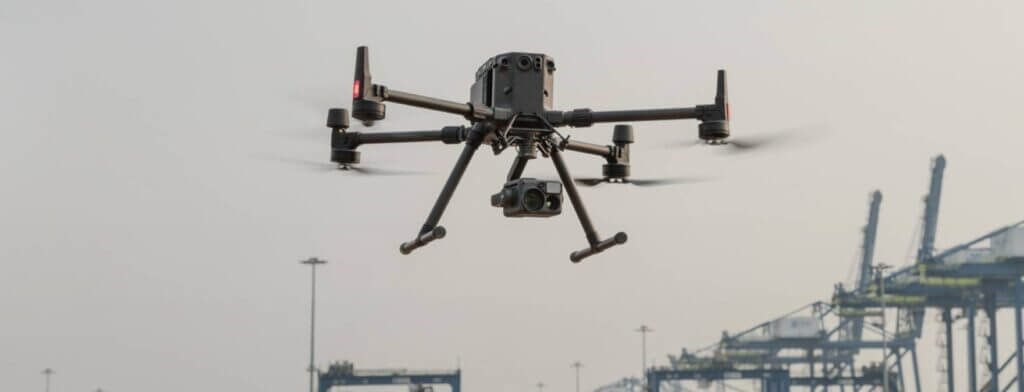
A drone roof inspection can provide a better-quality inspection than a manual inspection. This is because drones are equipped with high-quality cameras that can capture detailed images and videos of the roof, which allows the inspector to examine the roof from different angles and distances, and can help detect any issues that may have been missed during a manual inspection. Additionally, the images and videos captured by the drone can be saved and used for future reference.
Increased efficiency
Roof inspections with drones are more efficient than traditional roof inspections, because they can be carried out with minimal equipment and in far shorter time. A drone can cover a larger area in a shorter period of time compared to an inspector climbing up the roof. This can save time and increase productivity, allowing the inspector to carry out more inspections in a day. Additionally, the images and videos captured by the drone can be processed and analysed quickly, allowing inspectors to provide a report to the client in a shorter period of time.
Accurate, in-depth data collection
Drones are capable of collecting highly specific and accurate data during a roof inspection, which can be used to provide a more detailed report to the client. When it comes to a roof inspection, drone technology can collect data that can then be used to create 3D models of the roof, to identify any issues that may not be visible in 2D images.
Additionally, drones can be equipped with thermal sensors that can detect moisture levels or temperature changes, which can help identify potential issues that may not be visible to the naked eye. Accessing difficult to reach places or tight spaces means that drones have the potential to capture far more data than we can in-person, and they can be used repeatedly to take the same photo or video multiple times over a set period – useful if you want to compare before and after images more accurately.
With in-built GPS systems, drones can take the same shot from exactly the same location from much higher elevations than is possible for humans. It ensures the data collected is more in-depth and highly accurate which delivers better results for the project overall.
Reduced insurance costs
Because of the risks associated with traditional roof inspections, staff and sometimes equipment need to be insured against any potential damages or accidents that could occur. Since several workers are needed with this method of inspecting, the insurance costs for a roof inspection can be very high, increasing the overall expenses of a project. Drones reduce these costs considerably, not only because the team needed to carry out the inspections is drastically reduced but also there are fewer risks involved in the data capture process.
Drone technology eliminates the need to follow the various health and safety regulations which are needed when sending a person to perform structural examinations. These require the site to be checked for safety issues and any potential dangers observed before anyone can go up to carry out the inspection. With a drone, no-one needs to physically go up onto the roof, so insurance requirements are reduced significantly.
Limited disruption to businesses
Another benefit to drone surveys is that you don’t need operations within the property itself to cease in order for the survey to go ahead. Work can carry on as normal, so the business or residents occupying the space don’t need to be disturbed. Sometimes, when a roof survey is being carried out in person, the business might need to temporarily close, such as for access reasons, and that can impact productivity for the business in question. But with a drone survey, this worry is removed and the survey can go ahead regardless of what’s going on in the building itself.
Final thoughts
As you can see, using a drone for a roof inspection offers several benefits compared to traditional methods. It is a safer and more cost-effective option, provides better quality inspections, increases efficiency, and allows for accurate data collection. With the increasing popularity of drone technology, it is likely that more roofing contractors and inspectors will begin to use drones for roof inspections. As technology continues to advance, it is expected that drones will become an even more valuable tool for the roofing industry.